Pretty much everyone wants to be less stressed. To stay calm during deadlines, sleep like a baby, and have enough energy for a morning workout even after a long day.
You can do this without becoming superhuman. You just need a little herbal help.
Welcome to the world of adaptogens, nature's stress-busters that have been hiding in plain sight for thousands of years.
This article will explore a comprehensive new review published in the Journal of Agriculture and Food Research all about adaptogens.
What Actually Are Adaptogens?
Here's the simple version: adaptogens are plants and fungi that help your body adapt to stress. Think of them as your body's personal training coaches. They don't do the work for you, but they help you adapt and perform better under pressure.
The term was coined in 1958 by Russian toxicologist Nikolay Vasilievich Lazarev, but humans have been using these powerful plants for millennia. Traditional Chinese Medicine is packed with adaptogens. Same story with ancient Ayurvedic remedies.
What makes adaptogens special is that they enhance your body's ability to adapt to stress without increasing oxygen consumption. Meaning they help you handle life's chaos without burning you out.

The Science Behind the Magic
Now, I know what you're thinking. Sounds like wellness industry hype, right? Not quite.
The review, which analaysed almost 100 other studies, shows that adaptogens work by modulating your HPA axis, or your hypothalamic-pituitary-adrenal axis (but we can just call it your stress control centre). When you're stressed, this system goes into overdrive, pumping out cortisol and other stress hormones.
Adaptogens help regulate this response, reducing chronic inflammation and countering oxidative stress. Basically, they help turn down the volume on your body's alarm system.
Meet the All-Stars
The researchers examined several heavy hitters in the adaptogen world:
Rhodiola Rosea
This Arctic plant has been used for centuries in Russia and Scandinavia. It's particularly known for reducing stress, combating fatigue, and enhancing physical and mental performance. Even astronauts use it to prevent fatigue.
Ashwagandha
With a 3,000-year resume in Ayurvedic medicine, ashwagandha is the overachiever of adaptogens. The study highlights clinical trials showing it can improve sleep onset, reduce anxiety, and enhance cognitive function.
Lion's Mane
This distinctive-looking mushroom has been used in Traditional Chinese Medicine for centuries, but now research shows Lion's Mane contains unique compounds that support brain health by promoting synaptic plasticity, essentially helping your brain cells communicate better with each other.

Studies suggest it may help protect against neurodegenerative conditions and cognitive decline by encouraging neurogenesis (the growth of new brain cells) and maintaining synaptic integrity.
Reishi
Known as the "mushroom of immortality" in Korea and "divine mushroom" in China, Reishi has over 4,000 years of traditional use. And for good reason.
The study highlights that Reishi is rich in bioactive compounds like polysaccharides and triterpenes that exhibit antioxidant, anti-tumour, anti-inflammatory, and immunomodulatory properties. It also promotes deeper, more restful sleep by activating the parasympathetic nervous system.
Cordyceps
This parasitic (to insects, not humans) fungi enhances mitochondrial function, boosts energy metabolism, and improves cellular oxygen utilisation. Basically, it helps your cells work smarter, not harder. It also has impressive neuroprotective beenfits.

Why Your Body Actually Needs This
We're living in a world our bodies weren't designed for. Our ancestors dealt with acute stress (run from the bear, stress over). We deal with chronic stress (emails, deadlines, traffic, social media) all day, every day.
The study notes that with industrialisation, poor nutrition, stress, and reduced physical activity, lifestyle diseases now account for over 80% of global deaths.
Your body literally doesn't know the difference between a work deadline and a life-threatening situation. Both trigger the same stress response. Over time, this constant activation leads to:
- Poor sleep quality and insomnia
- Brain fog and memory problems
- Chronic fatigue (even when you're "resting")
- Weakened immune system
- Anxiety and depression
Adaptogens help break this cycle.
From Ancient Medicine to Your Morning Coffee
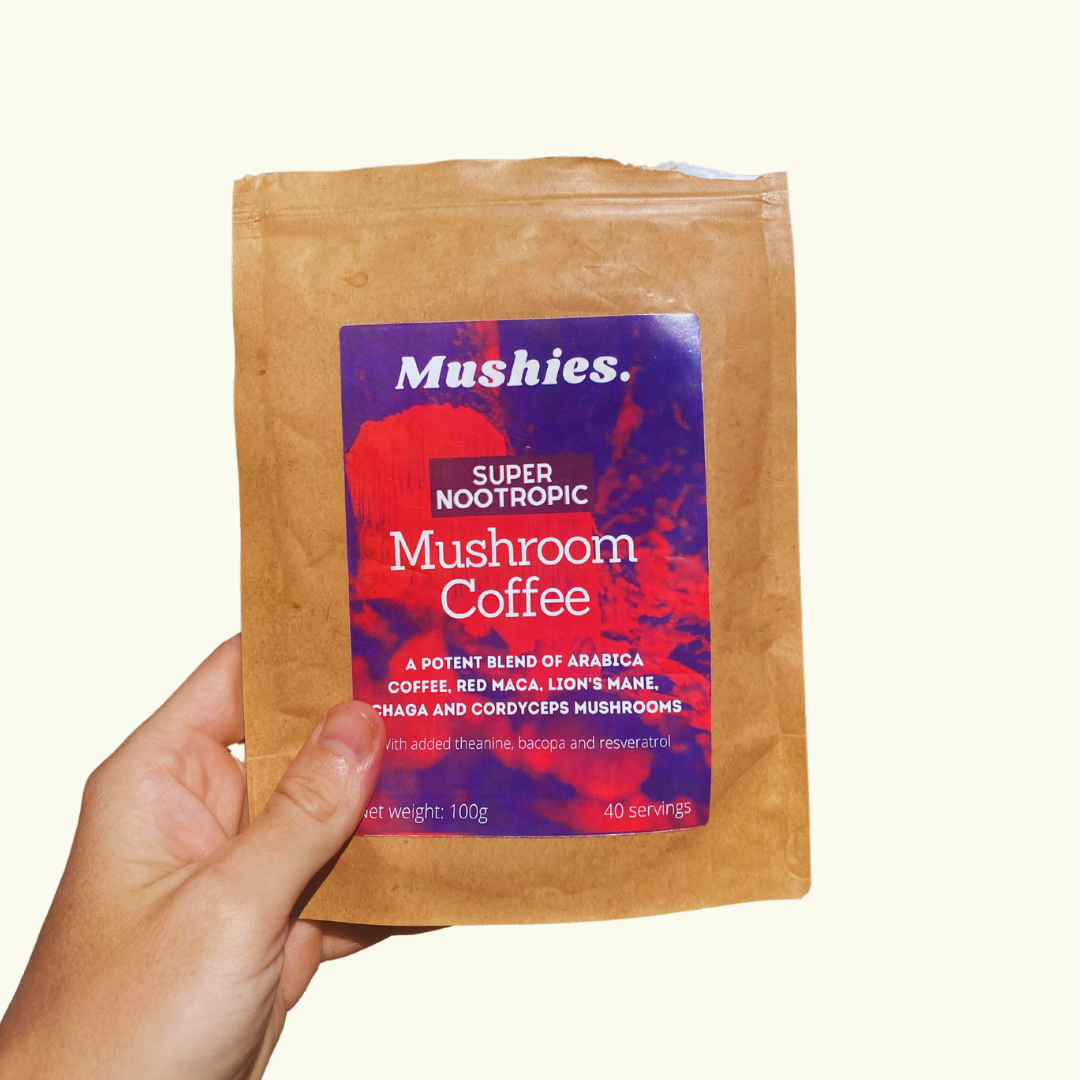
The researchers found that adaptogens are increasingly incorporated into functional foods and beverages. Think teas, supplements, fortified snacks, and adaptogenic coffees (like ours!).
The study explains that coffee infused with Lion's Mane provides cognitive enhancement and antioxidant benefits, while Cordyceps contributes anti-inflammatory and immune-boosting effects.
You're basically upgrading your morning ritual from a simple caffeine hit to a full-spectrum adaptogenic experience.

Reality Check
Now, let's be honest. Adaptogens aren't magic pills. The study acknowledges that most reported side effects are mild, such as digestive upset or headaches, and evidence on long-term safety remains limited. They also don't replace the basics: good sleep, proper nutrition, exercise, and stress management.
Think of adaptogens as optimisation tools. If your foundation is solid, they can help you level up. If you're running on four hours of sleep and living on coffee and stress, no amount of Rhodiola is going to fix that.
The researchers also emphasise an important point that we at Mushies take very seriously: product quality varies widely, and standardisation remains a challenge. This is why choosing reputable sources matters. Not all adaptogen products are created equal.
Bigger Picture
What fascinates me most about adaptogens is how they represent this beautiful intersection of ancient wisdom and modern science. For thousands of years, cultures around the world independently discovered these plants and fungi. They didn't have labs or clinical trials, but they did noticed that certain plants and mushrooms made people more resilient.
Now, as this comprehensive review demonstrates, we're finally understanding why they work. Adaptogens activate cellular defence mechanisms, triggering signalling pathways that induce stress-related proteins and neuropeptides. We're validating what our ancestors knew instinctively.

So, Should You Try Them?
If you're dealing with chronic stress, sleep issues, or just want to optimise your mental and physical performance, adaptogens are worth exploring. The study suggests starting with one - maybe Cordyceps for energy or Lion's Mane for focus - and giving it time. Most clinical benefits are seen at proper doses taken over 8-12 weeks.
The beauty of adaptogens is that they work with your body, not against it. They're not stimulants that override your natural rhythms. They're more like supportive coaches helping you find your balance.
In a world that's constantly demanding more, maybe the answer isn't pushing harder. Maybe it's about adapting. And for that, nature might have already figured out the formula.
Curious about incorporating adaptogens into your daily routine? Start with what works for your lifestyle, whether that's a mushroom-infused coffee in the morning or an evening cup of Reishi tea. Your future, calmer self might just thank you. Explore our range of adaptogenic mushrooms here.