For many women, menopause comes with severe sleep problems, anxiety, and brain fog. However, there's a mushroom that could really help women in this stage of their life.
Specifically, Cordyceps. Once an obscure part of Eastern medicine, now capturing global attention for what it truly is: one of nature's most powerful tools for energy, immunity, and cellular repair.
And now it might be a game-changer for menopausal mood and sleep disorders too.
The Study
A research team led by Dr. Insop Shim at Kyung Hee University just published a fascinating study in Biomedicine & Pharmacotherapy. They took cordycepin (the rare bioactive compound from Cordyceps) and tested whether it could help with the mood swings and sleep chaos that often come with menopause.

The researchers created a rat model that mimics menopause - namely ovary removal plus chronic stress.
Then they gave some rats cordycepin at different doses, some got estrogen (the standard treatment), and some got nothing. Over two weeks, they measured a bunch of markers for behaviour, sleep patterns, stress hormones, brain chemistry - the works.
The Results
Here's where it gets interesting. Cordycepin didn't just help with one thing. It helped with everything.
Sleep got better. Not only did the rats fall asleep faster, but actual deep, restorative NREM sleep increased. This is the kind of sleep where your brain does its cleanup work.
Anxiety dropped. In the elevated plus maze test (where anxious rats hide in enclosed spaces), cordycepin-treated rats were significantly more willing to explore open areas, which is a classic sign of reduced anxiety.
Depression-like behaviour improved. Cordycepin treated rats stopped giving up so quickly in stressful situations, showing more resilience and fight. This is not the first evidence of the anti-depressive effects of cordycepin.
The most impressive finding was that at the highest dose (5mg/kg), cordycepin performed comparably to estrogen. That's huge, because estrogen replacement is the gold standard, but it comes with cancer risks and other serious side effects.
The Molecular Mimic That Changes Everything
So what makes cordycepin so uniquely powerful? It all comes down to molecular structure.
Cordycepin is a rare compound that mimics adenosine, which is one of the building blocks of RNA and ATP (the energy currency of your cells). It's structurally almost identical to adenosine, except it's missing a single hydroxyl group. That tiny difference is what gives it such profound effects.

This molecular similarity allows cordycepin to slip into biological pathways where adenosine usually operates, interacting directly with adenosine receptors throughout your brain and body. Like a key that fits multiple locks, it can influence energy systems, neurotransmitter balance, inflammation, and even how your neurons fire.
Think of it as upgrading the body's internal battery, while simultaneously recalibrating the systems that control mood, stress response, and sleep.
How Does a Mushroom Do All This?
This is where it gets nerdy but fascinating. Cordycepin appears to work on multiple systems at once:
1. It calmed the stress response. The rats had lower cortisol (stress hormone) and less activation in the brain's panic button (the hypothalamic-pituitary-adrenal axis, if we're being technical). The body's fight-or-flight system literally dialled down.
2. It boosted brain fertiliser. Levels of BDNF (brain-derived neurotrophic factor, aka Miracle-Gro for neurons) went up in the hippocampus and cortex. More BDNF = better mood regulation and cognitive function. This is the same mechanism many antidepressants target, except cordycepin does it naturally.
3. It balanced brain chemicals. Serotonin increased and the ratio of glutamate (excitatory) to GABA (calming) normalised. Think of it as turning down the brain's volume knob while improving the signal quality. This is immune intelligence in action. Not overactivation, but orchestration.
4. It restored melatonin production. Melatonin is a sleep hormone that naturally drops during menopause. And cordycepin helped bring it back, resetting the circadian rhythm at its source.

My Take On This
What strikes me most is the multi-target approach. Modern medicine loves single-target drugs. One compound, one receptor, one effect. But menopause isn't a single-target problem. It's a cascade of interconnected systems going haywire.
Cordycepin seems to work more like a systems reset. It's gently nudging multiple pathways back toward balance rather than forcing one specific change.
This is what I mean when I talk about nature's intelligence. Cordycepin isn't overriding your biology. Rather, it's resonating with it. The mushroom acts as a conductor, ensuring every part of your body's orchestra plays in harmony.
And it makes sense when you understand the evolutionary backstory. For centuries, Cordyceps was prized by Tibetan herders and royal physicians for its ability to boost stamina and vitality. Traditional healers didn't have the language of adenosine receptors and AMPK activation, but they understood that this mushroom speaks the same language as human cells.
Beyond Menopause: The Bigger Picture
Here's what really gets me excited. Cordycepin's effects aren't limited to menopause. This compound is showing promise across a stunning range of conditions.
In preclinical studies, cordycepin has demonstrated the ability to inhibit certain cancer cell growth by halting RNA synthesis and triggering clean, programmed cell death (apoptosis). It's not a cure, but it's a clear example of how nature designs molecules that work with our biology, not against it.
The same adenosine-mimicking property that helps with mood and sleep also supports mitochondrial function (the powerhouses and CEOs of your cells. Animal studies show mice given Cordyceps extract swim longer, produce less lactic acid, and recover faster. That's why athletes and biohackers have been onto this mushroom for years.
Perhaps most fascinating is how cordycepin interacts with AMPK, often called the body's "energy switch." When AMPK is activated, your body shifts into fuel efficiency mode, burning fat for energy, balancing blood sugar, reducing lipid accumulation. Animal models have shown that Cordyceps can lower triglycerides, LDL cholesterol, and improve insulin sensitivity.
So the same compound that's helping menopausal rats sleep better and feel less anxious is also:
- Supporting cellular energy production
- Modulating immune function (NK cell activity increases while inflammatory cytokines drop)
- Improving metabolic health
- Potentially disrupting cancer cell proliferation

Limitations
Let's be clear, this menopause study was done in rats, not humans. The doses used were significant (though apparently safe based on toxicity studies). And it was just two weeks, so we don't know what happens with long-term use in this context.
Also, cordycepin didn't restore estrogen levels. This isn't hormone replacement therapy. It's working through completely different mechanisms. But that's actually kind of the point, since many women can't or don't want to take HRT.
Why This Matters
About 75% of menopausal women experience symptoms severe enough to affect quality of life. Many deal with depression, anxiety, and sleep disruption simultaneously (the trifecta from hell).
Current options are limited. You've got antidepressants (which often worsen sleep), sleeping pills (which don't address mood), or HRT (which works but has risks). The idea of a naturally occurring compound that addresses multiple symptoms through interconnected mechanisms is exciting.
Additionally, cordyceps has been used in traditional medicine for centuries. We're not talking about a synthetic lab creation. This is a compound with a very long history of human use, now being validated by modern science.
This new paradigm of health and medicine, based on nature's intelligence rather than pharmaceutical override, is slowly being adopted by cutting-edge researchers. And studies like this one are leading the way.
What's Next?
The researchers are calling for human clinical trials, which (let's be honest) will take years and significant funding. They want to test it with receptor antagonists to confirm exactly which pathways are involved, and look at long-term safety.
In the meantime, Cordyceps supplements are already available, though quality and cordycepin content varies wildly between products. The key is dual extraction, using both hot water and alcohol to preserve the full spectrum of cordycepin and beta-glucans for maximum bioavailability. You need both to get the complete profile of what makes this mushroom work.
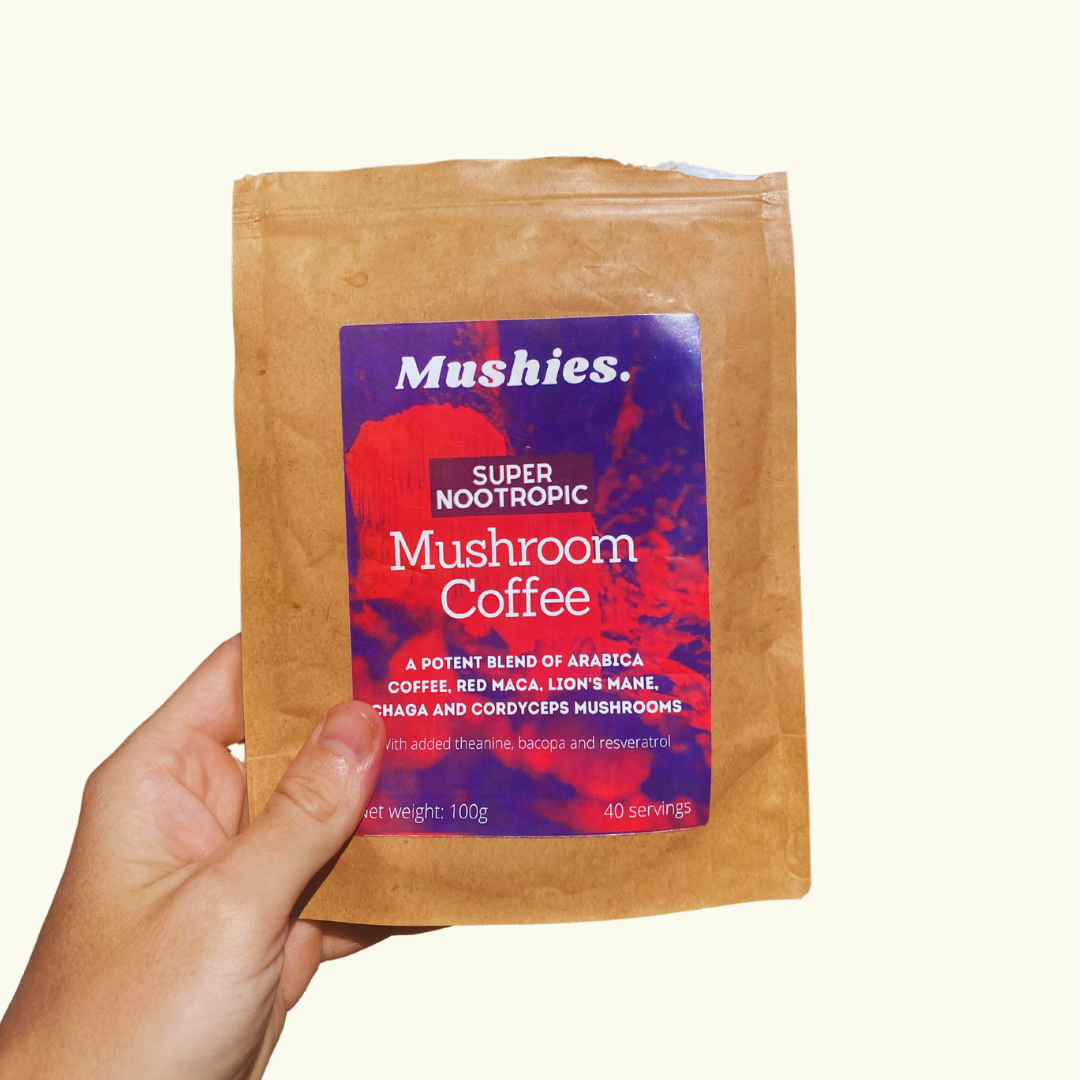
Explore our Cordyceps Extract Capsules, dual-extracted for maximum cordycepin, beta-glucans, and energy-supporting compounds. Or start your morning with our cordyceps-rich Super Nootropic Mushroom Coffee.

The Bigger Picture
What I find most compelling isn't just "mushroom compound helps menopause symptoms" (though that's cool). It's the reminder that the most elegant solutions work with your body's existing systems rather than overriding them.
Your brain doesn't have separate departments for mood, sleep, and stress. They're all interconnected. Cordycepin seems to recognise that, working across multiple systems to restore balance rather than forcing one specific outcome.
From immune modulation to mitochondrial support, from metabolic balance to mood regulation, Cordyceps offers a glimpse into a future of medicine based on resonance rather than suppression. A reconnection between human biology and the wisdom of the natural world.
Is this a cure for menopausal mood and sleep disorders? No. But it could be part of a more holistic, personalised approach that addresses root causes rather than just managing symptoms.
And I think that world is slowly realising that is a better approach to attaining good health.
We're only scratching the surface of what this mysterious mushroom can do. But every new study and every personal story of restored vitality points in the same direction. There's intelligence in these fungi. Intelligence that our ancestors intuited, and that modern science is finally beginning to decode.
The study: "Evaluation of antidepressant and sleep-promoting effects of cordycepin in a menopause-like stress model" by Min Sook Ye et al., published in Biomedicine & Pharmacotherapy, December 2025.
Explore our Cordyceps Extract Capsules, dual-extracted for maximum cordycepin, beta-glucans, and energy-supporting compounds. Or start your morning with our cordyceps-rich Super Nootropic Mushroom Coffee.