the average person in the UK only eats about 3kg of mushrooms each year. That's around 8 grams of mushrooms per day. Which is basically one small slice of a mushroom.
Meanwhile, researchers have been testing what happens when people eat one 84g serving per day, snd the results are fascinating.
The Mushroom Gap
Scientists recently pulled together everything we know about eating whole mushrooms and how it affects markers of heart disease and immune function. What they found suggests we might be dramatically underestimating one of the most unusual foods in our diet.
I say "unusual" because mushrooms aren't plants or animals. They're fungi - decomposers with cell walls made of chitin (the same stuff in insect exoskeletons) and membranes built from ergosterol instead of cholesterol. They're nutritionally unique in ways most people don't realise.

What's Actually in a Mushroom?
A single 84-gram serving of white button mushrooms delivers 24-43% of your daily value for copper, selenium, riboflavin, and niacin. They're also fat-free, cholesterol-free, very low in sodium, and contain a moderate amount of quality protein.
But the more interesting story is what else is in there. When researchers analysed seven common mushroom varieties using mass spectrometry, they detected over 10,000 compounds, with 1,344 compounds appearing in all seven varieties. The majority of these compounds weren't even identifiable in metabolomics databases. They're essentially unnamed.
Among the known compounds: L-ergothioneine (a powerful antioxidant), beta-glucans, ergosterol, various bioactive proteins, terpenoids, and alkaloids all offer benefits ranging from immunomodulatory to neuroprotective to hypoglycemic.
The Deficiency Fix
Here's where it gets practical. So researchers modelled what would happen if people added just one serving (84g) of mushrooms to their daily diet. In adolescents, it would increase potassium and fibre intake by 14% and 6% respectively. In adults, potassium would jump 12%, fibre 5%, and iron 3%.
More striking, the population inadequacy for copper, selenium, and niacin would decrease by 97%, 96%, and 94% respectively. That's right, just one serving of mushrooms could essentially eliminate widespread deficiencies in these nutrients.

What the Studies Actually Show
Most experimental studies tested 13-300 grams per day, which is far more than the 8 grams Americans typically eat. So we're not exactly talking about current consumption patterns.
But when researchers looked at what happened when people ate these increased amounts, the results clustered around a few consistent findings:
The triglyceride effect: In 80% of studies measuring this outcome, mushroom consumption decreased fasting triglycerides by an average of 19% compared to control or baseline. This happened whether people ate dried or fresh mushrooms, in amounts ranging from 35g to 300g per day. The most dramatic drops (36% and 23%) occurred in people eating 100g and 30g of oyster mushrooms daily.
Blood pressure: Consistent evidence from cross-sectional studies showed an association between greater mushroom consumption and decreased diastolic blood pressure in 75% of studies that measured it.
The non-effects: Most evidence supported no effect on HDL (83% of studies), LDL (75%), and C-reactive protein, a marker of inflammation (80%). No changes isn't a bad thing here, it just means mushrooms didn't make these markers worse while improving others.
The Immunity Angle
This is where things get genuinely interesting but frustratingly understudied.
Two studies found that consuming mushrooms increased salivary immunoglobulin A (sIgA) concentrations by 12-44% and secretion rates by 18-55%. This happened in healthy adults eating an average of 80g per day of shiitake or button mushrooms for 7-30 days.
This is important because IgA protects mucosal surfaces from bacterial and viral infection. So the findings suggest regular mushroom consumption may protect against infection.
In one study, consuming mushrooms increased gamma-delta T cell activation and proliferation by 51% and 24%, and natural killer T cell activation and proliferation by 368% and 37%. Those are the kinds of numbers that make immunologists sit up straight.
But frustratingly, only five studies have looked at mushrooms and immune function in healthy people. It's a massive gap in the research.

The Pregnancy Study
One trial stands out. Researchers gave 582 pregnant women 100g of white button mushrooms daily from pre-pregnancy until week 20 of gestation, comparing them to 580 women who ate no mushrooms.
The mushroom group saw a 24% decrease in gestational hypertension, 8% decrease in preeclampsia, 70% decrease in excessive gestational weight gain, and 9% decrease in gestational diabetes.
It's a single study, so we shouldn't over-interpret it. But those numbers suggest mushrooms might do more than just fill nutritional gaps.
The Mediterranean Connection
Only one study has looked at what happens when you add mushrooms to an otherwise healthy diet. Researchers had people adopt a Mediterranean-style diet, with one group eating 84g of mushrooms daily and the other eating the same diet without mushrooms. The mushroom group saw a 3% decrease in glucose but no differences in other cardiometabolic markers.
That 3% might sound underwhelming, but it does raise the possibility that mushrooms might amplify the benefits of an already-healthy diet. Or it might be that when you're eating well overall, individual foods matter less. We genuinely don't know yet.

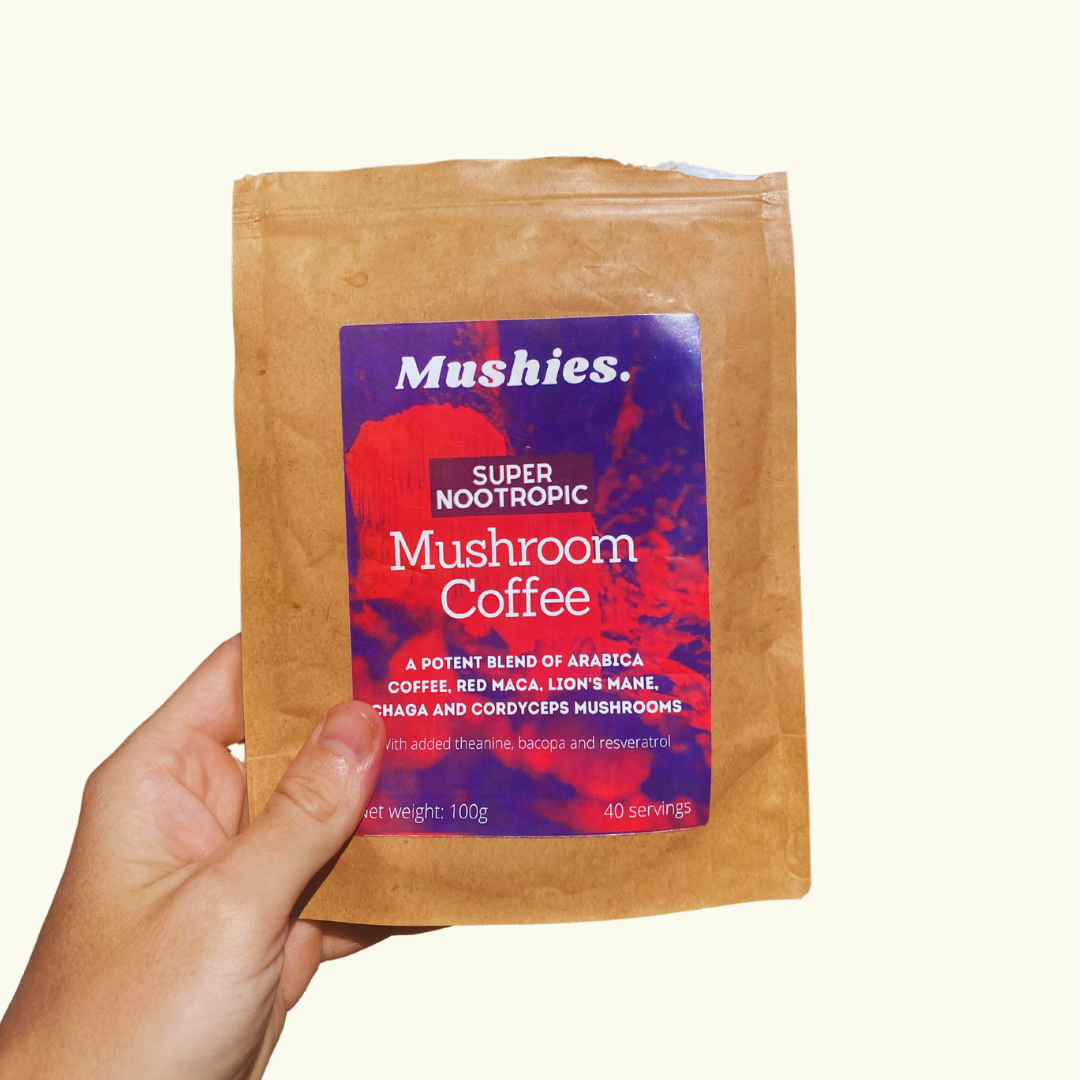
Consider Mushroom Supplements
Here's the thing about eating 84 grams of mushrooms daily, though: Not everyone enjoys eating mushrooms. If the texture bothers you, or you simply can't imagine working that many mushrooms into your weekly routine, mushroom supplements offer a practical alternative.
The extraction process used in quality supplements actually concentrates the beneficial compounds we've been talking about (beta-glucans, ergothioneine, and polysaccharides) that showed such promising effects in the studies.
While the research reviewed here specifically examined whole food consumption, many of the bioactive compounds responsible for the observed benefits are the same ones extracted and concentrated in supplement form.

Supplements are convenient in ways whole mushrooms simply aren't. If you're curious about adding mushrooms to your health routine but can't quite stomach the idea of eating them regularly, explore our range of mushroom supplements designed for exactly this purpose, delivering the beneficial compounds in a form that's easy to take consistently.
What This Actually Means
Look, mushrooms aren't going to cure heart disease or prevent every infection. The evidence doesn't support that level of enthusiasm.
But what the research does suggest is that mushrooms are substantially more nutritionally valuable than most people realise, containing compounds that appear to modestly improve some markers of metabolic health (particularly triglycerides and blood pressure) without any negative effects.
The fact that a single serving could theoretically eliminate widespread micronutrient inadequacies suggests we're leaving something on the table.
The researchers are careful to note their limitations. But given that mushrooms are cheap, widely available, low in calories, and free of the downsides that plague many "superfoods," the case for eating more of them seems solid.
In a world full of flash-in-the-pan wellness trends and exotic superfood supplements, simply upping our mushroom intake appears to be a safe and effective way of improving our health.