A recent study in Molecular Psychiatry has caught my attention.
Josh Allen and his team at Monash University published research on an important subject. What happens to your brain when intimate partner violence involves repeated head injuries, and can mushrooms help reverse the damage?
The Hidden Epidemic
Let's talk about what intimate partner violence actually does to the brain. We're not just talking about emotional trauma here (though that's devastating on its own). When someone is repeatedly hit or physically attacked by a partner, they often end up with mild traumatic brain injuries.
Add non-fatal strangulation to the mix, which cuts off blood and oxygen to the brain, and you've got a recipe for chronic inflammation and a brain that can't form new connections the way it should. That's neuroplasticity breaking down in real time.
The result is that victims struggle with memory, learning, anxiety, and depression. The violence doesn't just hurt in the moment, it can rewire your brain in ways that linger for a lifetime.

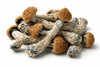
Enter Magic Mushrooms
So here's what Allen's team did. They created a rat model (using female rats, since most IPV victims are women) and subjected them to the kind of injuries IPV victims experience: daily mild head impacts followed by 90 seconds of strangulation, repeated for five days. Brutal for the rats, but necessary to understand what's happening.
Then they let the rats recover for four months - long enough for chronic effects to set in - before giving some of them psilocybin. The others got a placebo. The rats were then put through a battery of tests such as memory mazes, anxiety assessments, motivation checks.
Results found the psilocybin group showed significantly less anxiety and depression-like behaviour. Their memory improved. They learned better. And when researchers looked at their brains, they found reduced inflammation and more signs of healthy neuroplasticity.
The 5-HT2A Connection
Here's where it gets a bit technical, but stay with me because it's important. Psilocybin works its magic primarily through 5-HT2A receptors, a type of serotonin receptor that's involved in mood regulation and brain plasticity.
The researchers tested this by blocking those receptors in some rats before giving them psilocybin. When they did that, many of the benefits disappeared. This tells us psilocybin is working through a specific, identifiable mechanism.

Why This Matters
Look, I need to be clear. This is a rat study and its findings are limited. We can't start prescribing psilocybin to IPV survivors tomorrow and expect these results. Human brains are more complex, human trauma is more complex, and we need proper clinical trials.
However, I think this research is genuinely important for a number of reasons.
First, there are virtually no good treatments for chronic brain injury, whether from IPV, sports concussions or other causes. Once that inflammation sets in and neuroplasticity is impaired, we don't have great options. Most interventions focus on managing symptoms, not reversing damage.
Second, psilocybin research in other areas (depression, PTSD, end-of-life anxiety) keeps showing this same pattern of reduced inflammation and enhanced neuroplasticity. The IPV-brain-injury context is new, but the mechanisms aren't coming out of nowhere.
Third, IPV survivors often deal with complex trauma that's both physical and psychological. A treatment that could potentially address both the structural brain damage AND the associated mental health problems would be genuinely groundbreaking.
The Bigger Picture
What strikes me about this study is how it expands our understanding of what psilocybin might do. We've been focused on its psychiatric applications (treating depression and anxiety as mental health disorders) but this research suggests it could work for conditions where there's actual physical brain damage with psychiatric symptoms as a consequence.
That's a different ballgame entirely.
Allen and his colleagues write that psilocybin's "antidepressant, pro-cognitive, anti-inflammatory, and neuroplasticity-enhancing effects hold promise for improving chronic IPV-BI outcomes."
I'd add that if this pans out in humans, it could change how we think about treating traumatic brain injury more broadly, not just in IPV contexts.
And I'm not alone in thinking this way. Earlier this year, a narrative review published in Brain Sciences by Charles Palmer and colleagues looked at the broader question of psilocybin for traumatic brain injury recovery over 29 studies. They reviewed everything from animal studies to human trials in related conditions and came to a similar conclusion: psilocybin's combination of anti-inflammatory effects, neuroplasticity promotion, and mood disorder relief makes it a compelling candidate for TBI treatment.

This review highlights psilocybin's ability to reduce inflammatory markers like TNF-alpha and IL-6, promote the growth of new neural connections through mechanisms involving BDNF and glutamate signalling, and crucially, address the psychological fallout that makes recovery so difficult.
The Palmer review also noted something important about TBI patients specifically: they have incredibly high rates of depression. 56% at three months post-injury, 53% in the first year for mild-to-severe cases. Compare that to the general population's 6.7% depression rate. That's likely neurobiological. The same brain damage causing cognitive and motor problems is also disrupting mood regulation.
So when we're talking about psilocybin for TBI, we're potentially addressing multiple problems with one intervention. The structural damage, the inflammation, and the mood disorders. That's what makes this approach potentially groundbreaking.
What's Next
The obvious next step is human trials. Can psilocybin safely and effectively help IPV survivors who are dealing with chronic symptoms from repeated brain injuries? How would you dose it? Would it need to be combined with therapy? Would benefits last, or would multiple doses be needed?
These are answerable questions, but they require careful, ethical research, especially given we're talking about a vulnerable population.
In the meantime, this study adds to a growing body of evidence that psilocybin does something genuinely therapeutic to the brain, actually promoting healing at a cellular level.
And for people living with the long-term consequences of violence, the possibility of healing is priceless.
Study: Psilocybin mitigates chronic behavioral and neurobiological alterations in a rat model of recurrent intimate partner violence-related brain injury: Allen, J., Sun, M., et al. (2025). Published in Molecular Psychiatry, November 5, 2025.